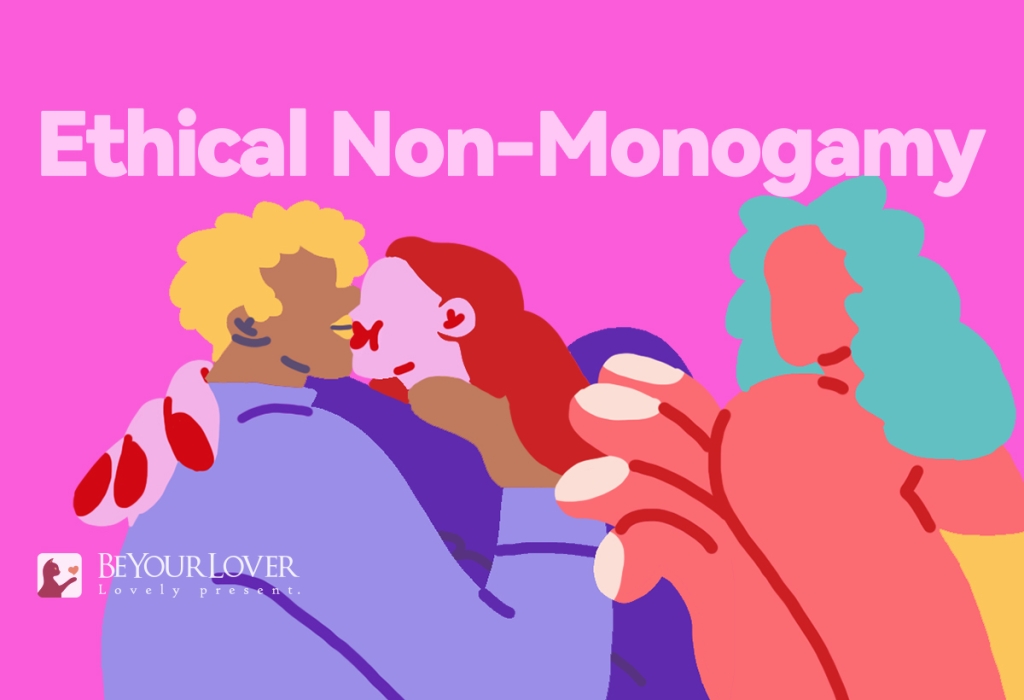
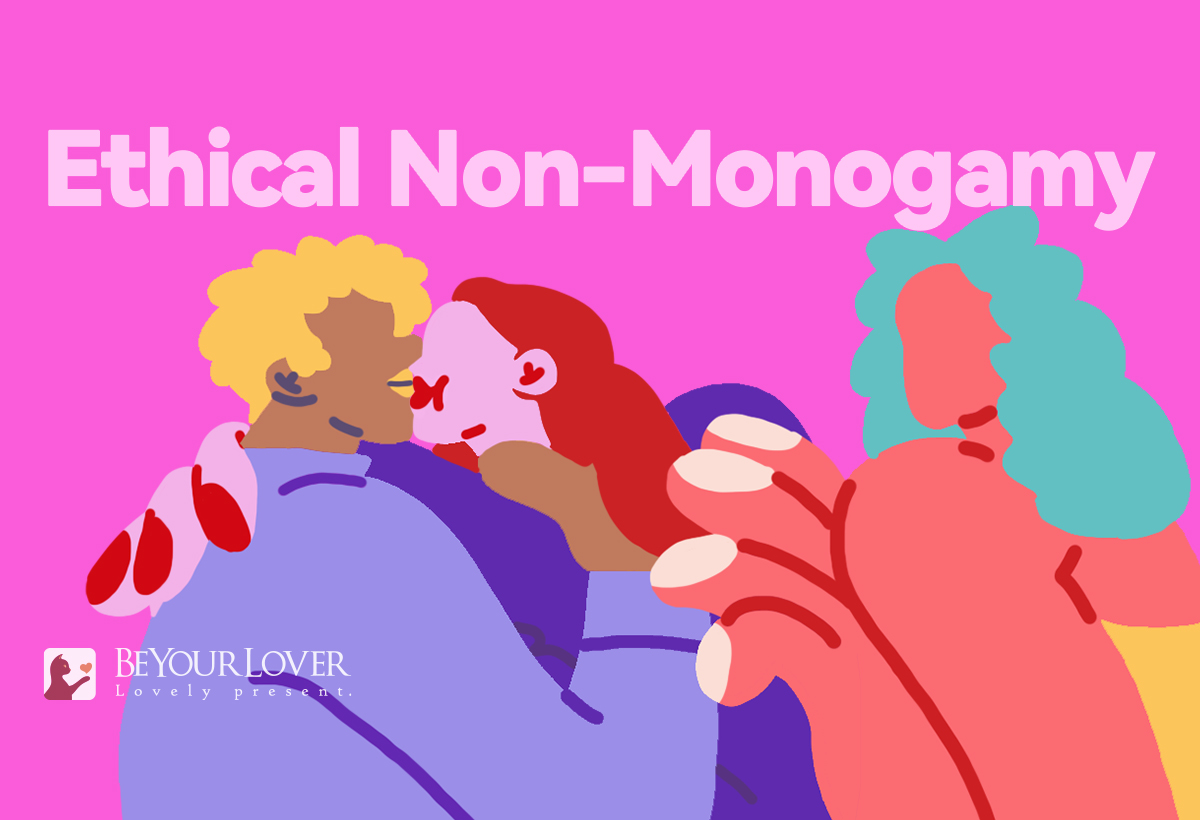
Let’s talk about the part of marriage no one wants to admit out loud.
You are married, but a part of you still dreams of flirting or having sex with other people. But there is this guilty feeling gnawing inside you, a small voice judging you that you're a cheat or immoral.
When you search the internet, there are varying opinions. Some are okay with it, and those who are into the soulmate fairy tale of being with one person, forever.
Before we proceed, let me clarify a few things. You do you.
Although this article tackles the benefits of non-monogamy, it doesn't mean we're against monogamous relationships. If you've found "the one," or if not, but want to be with just one person forever, there's no problem with that.
But let's face it, not everyone is into it. And this article is for those people who want more.
First, a quick reframe. Our culture treats monogamy as the only “successful” relationship model. That’s called mononormativity, the unspoken rule that a real relationship must be exclusive.
But it doesn’t have to be that way if you think monogamy is not your thing. However, even though we can be respectful towards people who are in an open-relationship, into polygamy, or a polyamorous relationship, we do not condone disrespect.
We are talking ethical non-monogamy here, which should have the following elements:
- Consent
Everyone involved knows what’s happening and says yes to it.
- Honesty
No double lives, no sneaking around, no half-truths.
- Boundaries
Your partner also agrees with it, and you are both clear about your boundaries.
Far from being chaotic, research on consensual non-monogamy shows something most people don’t expect: these relationships score just as high, or even higher, on communication, sexual satisfaction, and psychological well-being as monogamous ones, when they’re done ethically.
That is why it is not surprising that it’s not just a fun or refreshing experience; it also has benefits to offer.
How Practicing Ethical Non-Monogamy Benefits Both Health and Relationships
Because it’s uncommon in society to have more than one partner, the benefits of an ethical non-monogamous relationship are often less talked about. Here are some of the benefits of practicing “ethical” non-monogamy.
Radical Honesty and Conflict Resolution
Most couples are taught to be monogamous. They’re not taught how to talk about attraction, changing desires, or fantasies without blowing everything up.
In ethical non-monogamy, talking about these is the blueprint of their relationship. They are open to whom they are attracted to, they negotiate boundaries, and talk about jealousy. For this reason, it prevents insecurity, making assumptions, and passive-aggression in the relationship.
Psychologists like Terri Conley and Amy Moors have studied consensual non-monogamous couples and found a consistent pattern. These couples tend to be more active and constructive in conflict.
Rather than stonewalling or withdrawing, they bring issues up directly, use collaborative language, and revisit boundaries and agreements.
Emotional Security in the Relationship
One of the biggest myths about ethical non-monogamy is that it’s for people who can’t commit or are afraid of intimacy. The data doesn’t back that up.
Studies on attachment styles in polyamorous and other consensual non-monogamous relationships show that a large proportion of people thriving in ethical non-monogamy identify as securely attached.
They’re capable of commitment. It’s just that they’re not limiting commitment to one person.
Here’s the common monogamous belief that ethical non-monogamous relationships commonly disrupt:
- The belief that your partner must meet 100% of your needs, such as emotional, sexual, social, intellectual, domestic, and parenting.
- The idea that jealousy equals love and that any attraction outside the relationship is a betrayal.
- The quiet expectation that your partner will sacrifice parts of themselves so you can feel safe.
In an ethical non-monogamous relationship, a partner has more choice and freedom to breathe. The relationship doesn’t feel like prison at all. Trust is built on the reality that both of you are humans and can still feel attraction to others. This results in each of you growing as individuals without fear of change or abandonment.
This is why a lot of those who are in this kind of relationship say that they feel more secure, because there’s no ownership, just respect and clear boundaries.
Compersion
Compersion is the feeling of real happiness for your partner’s joy with someone else, which is the emotional opposite of jealousy.
If that sounds impossible, it’s usually because most of us are trained to treat jealousy as holy proof of love. We’re never taught to ask why we’re jealous or how we’re gonna feel secure in our relationship.
A successful non-monogamous relationship forces your doubts, questions, and insecurities out of your head and onto the table. And letting these issues out in the open to be discussed becomes less of a monster. It also encourages emotional growth in the relationship. And most of all, it allows couples to experience compersion.
Avoids the Tendency of the “Prudence” Paradox
One of the first fears people have about ethical non-monogamy is the risk of STIs, which is logical, because more partners, more risk. But research on Science Direct comparing consensual non-monogamy vs. cheating or serial monogamy tells a different story.
Studies on consensual non-monogamy communities find that they are the ones who use condoms more consistently. Because they are aware of what they’re getting into and there’s no pressure for them to hide something, they get tested regularly and share results with their partner openly.
This becomes possible because they already know the risk and plan for it. There’s no pretending, while secretly hooking up on the side.
Also, people who cheat often avoid condoms with their partner to prove loyalty, skip testing to avoid a paper trail, and hide their sexual history, so there’ll be less information available that will expose them.
We call this the prudence paradox, which refers to the people who look responsible on paper by appearance, but end up engaging in riskier sexual activities because of the secrecy.
Long-Term Sexual Satisfaction
Let’s talk about “bedroom death.” Even deeply loving couples hit seasons where sex feels like a routine, pressured, or out of obligation. If you’re monogamous, you don’t have any other choice but to push through and pray it gets better, or not to have sex at all, and quietly resent each other.
But in an ethical non-monogamous relationship, you have more options.
Research comparing monogamous and consensual non-monogamous relationships finds that people in ethical non-monogamous relationships often report equal or higher levels of sexual satisfaction.
It’s because they can explore different kinks or styles of connection with different partners. Also, their primary relationship is under less pressure to be performative in bed. And there’s a mix of security and novelty that keeps their desire burning.
Of course, their experience is enhanced with the help of sex toys, such as the Rosalia, which stimulates both the giver and the receiver.
Biologically, humans are wired for what’s called the Coolidge Effect, where we tend to experience renewed arousal with new partners or new scenarios. In strict monogamy, acting on your nature is often labeled betrayal.
But with ethical non-monogamy, answering to your nature is normal. Your relationship provides a safe outlet to express your desires. You are not stuck in an all-or-nothing trap where your only options are endure or cheat.

Sociosexuality Alignment
Some people are genuinely happiest with one partner, sexually and romantically, for life. Others are not. That isn’t a moral failing; it’s partly temperament.
Psychologists use the term sociosexuality to describe how open someone is to sex without deep romantic attachment.
People with more restrictions often report feeling trapped, ashamed, or broken when forced into a monogamous relationship that doesn't fit them. When they finally explore ethical monogamy, many report less shame and anxiety, less cognitive dissonance, and greater life satisfaction.
Enhanced Support Systems
In monogamy, your partner is supposed to be your best friend, therapist, co-parent, sexual partner, and financial partner, in other words, your entire social life. So, it’s no wonder people cheat.
Many ethical non-monogamous structures, especially polyamory, lean toward a “village” or “constellation” model. Instead of one person being everything, you have a network. Partners who each bring different strengths and kinds of intimacy.
You also have these metamours (your partner’s partners) who may become friends, co-parents, co-caregivers, or simply additional compassionate adults in your family.
Mental health-wise, this can look like more emotional support during crises, such as sickness, job loss, and grief. There’ll be less pressure always to be available.
Here is Luna Martinez’s TED Talk on the lessons she learned in an ethical non-monogamous relationship:
The Intentional Relationship
Note that although there are a lot of perks in ethical non-monogamy, it doesn’t fix bad relationships. If your relationship is already wobbly, don’t engage in this relationship. Intentionality and respect are the key components of this kind of relationship.
Although there are lots of benefits in ethical non-monogamy, one should still practice safe sex and openness. Be honest about who you are and what you want. Talk about boundaries and listen to each other’s needs.
If done right, this setup can transform your relationship.
Explore ethical non-monogamy safely and healthily with Beyourlover.com.
Special Thanks To:
Amy Moors
William Chopik
Robin Edelstein
Terri Conley